The musings of Sean Paul Murphy: Editor, Producer, Screenwriter, Author. Or, Hollywood -- and beyond -- as seen from an odd little corner of northeast Baltimore, Maryland.
"Betrayed" is a terrific forty-something-minute narrative featurette I wrote for the Counter-Intelligence Division of the Federal Bureau of Investigation.
Chances are very slim that you will ever see this film unless you work in the counter-intelligence community. It is a training film to make people aware of the danger signs that one of their co-workers might have been compromised. What is fascinating is that instead of making a traditional training film, the powers-to-be decided they to make a narrative film to try to capture the emotions as well as the minds of the viewers.
That isn't the way things normally work.
Here's the plot:
Doug Collins has been a highly-respected analyst at the FBI for twenty-five years. He is liked and admired by all the members of his team, but they've seen changes in Doug recently: an attractive young girlfriend, working odd hours, increased frustration at work. And then there was the time he was seen texting on his Blackberry from inside the SCIF. It's all probably nothing. They know his recent divorce has been tough on him. It's not like he's a spy. But what if he is? What is the price of silence?
So how did I become a screenwriter for the FBI?
The film was being produced by a Northern Virginia company called Rocket Media Group. Normally, they would hire a copywriter for a training film, but since the FBI wanted a narrative film, they decided they needed an experienced screenwriter. The producer/director of the film, Tom Feliu, called a friend at the office of Baltimore's most famous resident director and asked for a recommendation. Someone in that esteemed office recommended me and I was soon brought onto the project.
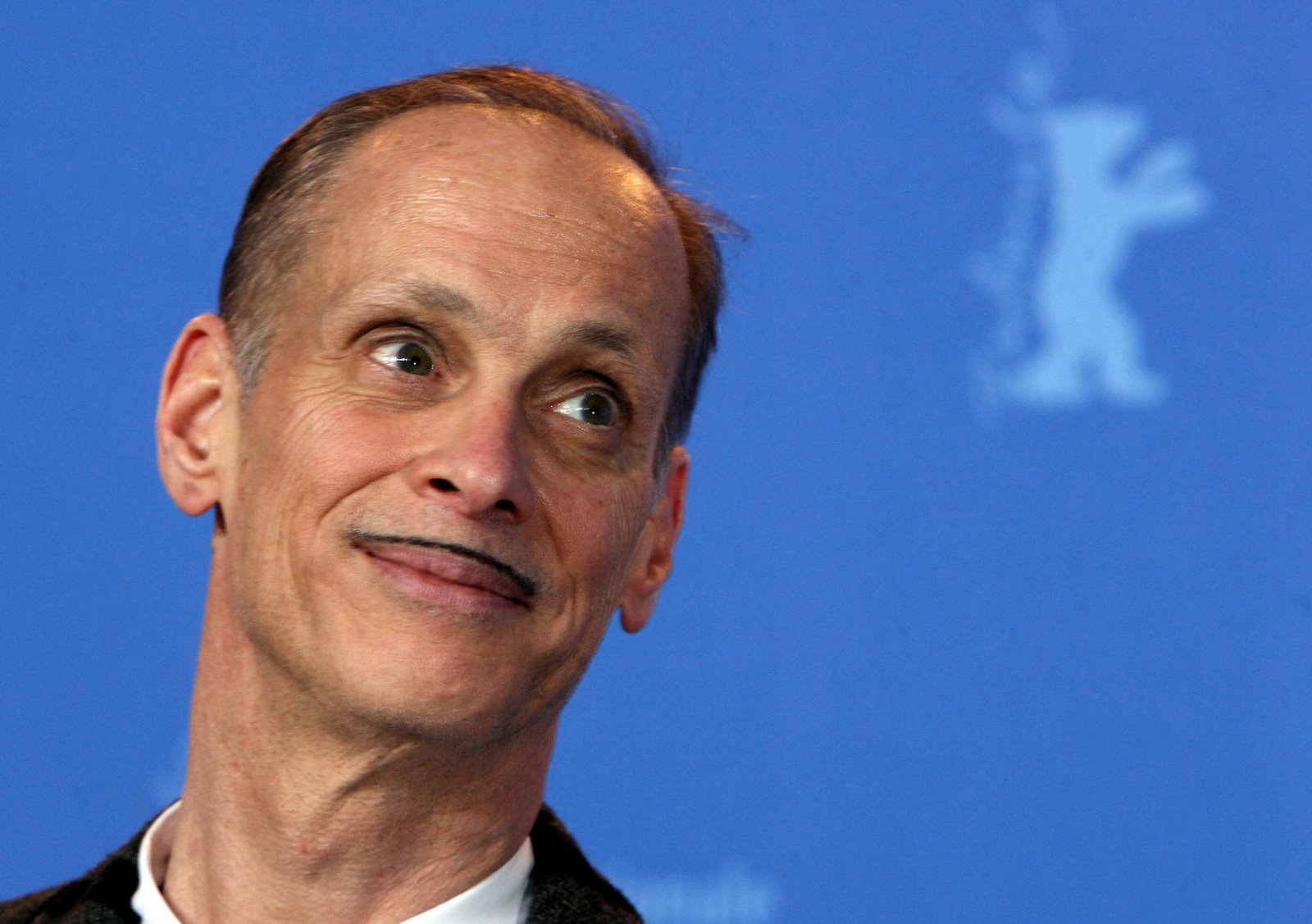
A famous resident Baltimore director,
who will remain discreetly nameless here.
In my opinion, the success of project depended entirely on decision made in my first meeting with the FBI. To me, it was essential that compromised agent, Doug Collins, be portrayed as a real human being and not a stock villain. I wanted his slide from patriot to traitor to be realistic and understandable. Furthermore, I thought it would be good for him to take the first step out of a misguided desire to help his country. Fortunately, everyone, Tom and the folks at Rocket Media, and our handlers at the FBI were in total agreement.
The details for film grew out of meeting and conversations with various FBI Special Agents with direct knowledge and experience in these matters. The counter-intelligence community is very tightly-knit and every agent in those meetings knew at least one of our recent traitors. They walked Tom and I through non-classified reports on the careers of many traitors and explained their motives and methods.
The time I spent with those agents were some of the most memorable in my life. My admiration for them and the work they do is boundless. They live in a complex, high-stakes world of secrets and lies. Not even their spouses or children can know exactly who they work for or what they do. Imagine that. Never being able to tell your family or friends about your successes or failures. Never being able to complain about the boss.... Or get a high-five when you've earned one.... I don't think I could do it. (I mean, look at me, I've got a freaking blog!)
I was determined to do right by those valiant men and women. My greatest struggle was to find their voices. I have probably seen hundreds of movies with FBI agents portrayed in them, and none of those films captured the voice and attitude of the people I found myself working with. I hope this film succeeded.
There was some talk that they would add classified material to program. Fortunately, they didn't. Otherwise, I would not have been given a copy. That would have been too bad, because the film turned out very well. Tom did a great job directing it and the cast was excellent too. The production values, per minute of screen time, were much higher than any other film I have worked on and it shows. Plus, when you're the FBI, you have no problem securing great locations in DC.
When the film premiered, the cast and crew was invited to watch it with an audience of movers and shakers in the intelligence community. The agents who guided us through the process were extremely happy with the final film and they believe it will be very useful. Also, happily, the audience found the film realistic and believable. They didn't find the characters or the things they said phony. That was great.
I wish I could show it to you, but, since I can't, here's the trailer for the film "Breach" which is based on the most damaging case of espionage in American history. Some of the agents I met and worked with on "Betrayed" were actually portrayed by actors in this film.
An exposed human skull in Baltimore's
historic Mount Auburn Cemetery
It started with what seemed like a summer cold on July 2nd.
It got worse and worse. Coughing. Hacking. Tremendous shortness of breath. Weakness. Inability to sleep. Waking up in the middle of the night literally choking on mucus. And let's not forget a myriad of weird and dangerous side effects from the self-prescribed mixture of over-the-counter drugs I was using to combat the symptoms.
In August I decided to see my GP. He listened to my back. Sounded like pneumonia. That was a relief! I didn't want to be the kind of guy who'd be waylaid by some stupid cold or flu. The Doc prescribed some antibiotics and told me to get an X-Ray.
The X-Ray came back. No pneumonia. Time for the specialists. Time for the MRI.
The result: Swollen lymph nodes. Sadly, I have learned the hard way that the adjective swollen is only positive when applied to one organ. And the lymph nodes are not that organ. I was told not to jump to conclusions, but everyone was thinking the same thing: The Big-C. Lymphoma.
They needed to do a biopsy. Not a needle one. They needed to make an incision down below my throat and yank out enough of a lymph node to see what was going on. It was a routine operation. Out-patient. I would come in around 7am on Tuesday, August 10th, and I would be home in time for lunch.
It didn't quite work out that way.
After they lifted me onto the operating table, I remember the anesthesiologist saying, "I'm going to give you a little of this." The next thing I remember was waking up in the Intensive Care Ward with a tube down my throat. I immediately reached to get it out, but discovered that my hands and legs were secured. Fortunately, the nurse came in and immediately removed the tube. Before she left, I asked her if she could untie my limbs and she did. Glancing around the room, I saw a calender on the wall but since I wasn't wearing my glasses, I couldn't quite make it out. But it looked like the 11th. I asked the nurse, "What day is it?"
She said, "Wednesday, the 11th."
"What time?"
"10:30."
"AM or PM?"
"AM."
I couldn't believe it. I had lost an entire day. Half-joking, I asked her while she was walking out if I had died or something. She started with a slow, "Well...."
(That's never the response you want to hear when you ask someone if you had died.)
She continued: "You didn't quite flat-line on everything."
Oh. That's a relief.
Here's what happened.
Apparently the operation was a complete success. They brought me back out of the general. I was conscious. The surgeon informed me that I didn't have cancer, but instead a serious though much more easily treated disease. I was talking. I was happy. Then, as they were waiting to move me to post-op, I fell into a deep sleep.
A really deep sleep.
The kind of deep sleep that your vet puts your dog into when he's very old and sick.
The kind of sleep you don't wake up from.
I have never gotten the whole story of what happened and I doubt I ever will. Apparently my blood pressure suddenly shot up, and when they brought it down, they brought it down way too far. All the way down. I stopped breathing completely. I've received conflicting reports about the status of my brain waves. In other words, I don't know whether I was really dead, or, as they would say in "The Princess Bride," only mostly dead. I have no memory of any of that -- or of viciously fighting off the staff of the Intensive Care Ward when they tried to put the breathing tube down my throat later. (I know it was bad because four members of the staff came and apologized to me the next day for how roughly they treated me. I just laughed and said, "Don't worry, I don't remember anything!")
I didn't realize the significance of what I experienced until the following Tuesday when I went into the audio studio at Clean Cuts to record a temporary narration track for my nearly completed documentary feature "Sacred Ground: The Battle For Mount Auburn." The film is about community activists and family members battling a Methodist church for control of Mount Auburn Cemetery -- which, for years, had been the only cemetery in the Baltimore area where African-Americans could be buried. It is a registered historic landmark that has fallen into such horrifying condition that bones litter the ground and weeds cover all but the highest monuments. It is a tale of grave robbing, grave recycling and every other awful thing that could happen in a cemetery.
I will leave it to another blog to tell how that the documentary came into being, but, as I was recording my narration over the grim images, it suddenly became very real to me how, if things had gone a just a hair differently, not only would I be dead, I would already be buried. And gone forever.
It was very sobering.
And exhilarating.
It was one of the best things that ever happened to me. Talk about putting things in perspective! Not only did it make me appreciate what was really important, it taught how little of what I do is ultimately important at all! I didn't come away wanting to rearrange my priorities. I came away wanting to dump most of them!
Prior to the operation, while my health was rapidly declining, Netflix helpfully placed "Flight From Death: The Quest For Immortality" in my recommended queue. The theme of the film is that human beings are the only creatures that comprehend that we are going to cease to exist and that all culture and civilization was born out of death-defying myths we created to give ourselves immortality. This profound death anxiety at the core of our being is the cause of war and conflict between people of different cultures, religions and philosophies. When confronted with a death-defying myth that contradicts our own, we must destroy it before it calls into question our own accepted concept of immortality.
I had long ago accepted Christianity as my own brand of death-defying mythology -- to use the filmmakers' terminology. Frankly, I find no mythology necessary to believe in God. No faith either for that matter. Faith is needed to believe and trust in God's promises, and what brand of God is most accurate, but I find God's existence inherently obvious and logical. Others may disagree. I could spend a great deal of time on that subject, but that's not really the purpose of this blog. Ask me about it sometime later if you'd like. The two thoughts -- they are ultimately too mundane to be called revelations -- that struck me as a result of my near death incident involve immortality and control. I believe what I have come to realize is true whether you believe in God or an afterlife or not.
If I am right and there is a God, and I have chosen the proper brand, then my consciousness will survive this earthly existence in another plane of existence. I will have immortality. But not here. Not in this material world as it exists now.
In this material world immortality is impossible. Whether you be Christian, Hindu or Atheist.
How can it be achieved? By accomplishment? What kind?
Let's look at Alexander The Great. They didn't call him "The Great" for nothing. Few human beings have done as much to shape Western Civilization as we know it. He was a giant military and political figure whose deeds and reputation has survived for over two-thousand-and-three-hundred-years.
Good for him.
But, of the millions of other people who lived in his time, how many others do we know by name? One thousand? Two thousand? Probably less. And, of those we know, what do we know of them? Their personalities. Their lives.
And what of the Great Alexander? Will they still be talking about him in another twenty-three-hundred years? How about fifty-thousand-years? How about a million years? I don't think so. Even Alexander will be lost in the wash of time.
Others seek immortality through their families. They take pride in the fact their genes will survive in the children of their children for as long as men walk the earth.
But how satisfying is that immortality? You may provide a microscopic splash of chemicals to a strand of DNA but nothing of your personality or consciousness will survive. These descendants of yours might end up with gall bladders consistent in size and color with your own, but, trust me, they will not know you.
Can you name all eight of your great-grandparents? I can. I know what they looked like. I know what they did for a living and quite a bit about their characters and personalities. Can you name all sixteen of your 2nd-great-grandparents? I can, but I don't have pictures of all of them. And the details of their lives are vaguer. Can you name all thirty-two of your 3rd-great-grandparents? I can't, despite a great deal of effort. Trust me. There is no personal immortality even in family. Your descendants will forget you. They will not think you had any bearing whatsoever on their existence.
I must admit that when I first dreamed of becoming a writer I hoped to write an immortal work. I foolishly thought that books lasted forever. Most won't see a third printing. There are books I read and loved as a child that are gone now. Will people still be reading Stephen King two thousand years from now? Hard to say, but my guess is no. Of the tens of thousands of books written by the ancient Greeks and Romans, how many are we still reading today? A hundred? Two hundred? Even the Bible makes direct references to earlier texts which no longer exist.
Then again, I'm a filmmaker. My prospects for immortality in my work is even more hopeless. I have written quite a few films and hope to do more, but I am not so certain people will be watching them one hundred let alone one thousand years from now. Think about it. When was the last time you sat down and watched a film from 1911? I have probably watched more silent films than the average bear and I can't remember the last time I did. But, you may say, those films were silent. If they had sound, we'd still watch them. Really? If they were shooting films five hundred years ago, do you think people would still be watching them for enjoyment? They would seem so primitive to us and, chances are, the dialect would sound so foreign to our ears that the average viewer wouldn't be able to stand them. Only archaeologists and historians would find them interesting.
So what do I say? Screw earthly immortality. It is unattainable. Every moment spent in its pursuit, knowingly or unknowlingly, is wasted. There are more important things to do. What are those things? You decide for yourself, but they're not going to grant you immortality, and, in any real sense, they will not survive once you and people who knew you die. And they will die. So will you.
My only hope for immortality is spiritual.
The other lesson I learned was about control: That we have none.
None.
Christians will be among the first to tell you that they believe that "God Is In Control." They'll even put it in quotes like I did. However, when you talk to them about their plans, you'll discover what they really mean is that "God And I Are In Control." At least that's the way it was with me.
Control is man's most cherished illusion. How many couples get divorced because their spouses were trying to control them? How many dictators have seized power to control their people? How many nations have gone to war to control other nations?
Everybody wants to believe they are in control, but, trust me, you're not. It's an illusion, but a very strong one. I think it is easier to surrender immortality than control.
One Saturday night, about two weeks before my ill-fated but illuminating operation, I was given a very important lesson on control. My lovely wife and I decided to stay home and play some 500 rummy and watch some stand-up comedians on Netflix. My breathing was shallow to begin with, however, as the night progressed, it became increasingly shallow. That was disconcerting because I was not exerting myself in any matter that would warrant such a reaction. I was simply playing cards and watching TV. I had no control over it whatsoever. Since nothing I was consciously doing was causing the change, there was nothing I could consciously do to stop the process short of going to the hospital. It's hard to abstractly measure such things, but I would have to say between 6pm and 11pm that night, I probably lost sixty percent of my already diminished breathing capacity. Part of me was genuinely frightened that this downward breathing trend would continue until I simply couldn't breathe anymore, which would be very bad since I have really grown accustomed to breathing over the years. However, part of me was watching myself react to this utter loss of control. I was wondering what I was going to do. How long would I wait before I told my wife and asked to go to the hospital. Fortunately, around 11pm my breathing stabilized. In the morning, it had returned to normal.
This brings me to my routine biopsy that nearly cost me my life. Obviously, when you let yourself be drugged, you are no longer in control. You have surrendered it to others. However, you hope they are in control.
My younger brother, who works in a hospital, says I am making too much of this incident. That my life was never really in danger. That the doctors were in control. Really? I don't think so. If they were truly in control they would have never let me stop breathing in the first place. The fact that, thankfully, they had the skill and training necessary to bring me back in no way means they were in control.
What do we control? What we do for a living? Sure, until you get fired. Who we marry? Sure, until your spouse decides they don't love you anymore. Where you live? Until your house burns down. Think about it. Do you have habits or vices you've been trying unsuccessfully to quit? Why can't you do it if you are truly in control? But let's go even deeper. Do you even really control your own thoughts? Don't you have thoughts you prefer not to think? If so, why do you think them?
Control is an illusion. You are not in control. Neither am I.
In a sense, professionally, I have given up on control decades ago. As a film editor, I have always viewed myself more a craftsman than a creator. I have a strong sense of what is right and appropriate at a given moment in a sequence. However, I know the ultimate decision-making power belongs to the person who hired me. It's their film. And, in the end, even if it is wrong, I will do it their way or they will simply fire me and get someone else to do it.
As a writer, I find it harder to yield my so-called control. A screenwriter, in a sense, becomes a god over a fictional new world. We create the environment. We create the people. We want our people to do what we want them to do. It is hard to give them to another bigger god who may want them to do things differently. However, if I want to take my little people from a piece of paper and put them on the screen, I need the producer. Or at least his money. And, you know what, sometimes a producer can actually change things for the better.
So where do I stand now? Screw control. I will still try to follow my conscience and do what I believe is right in given circumstances, but I will not waste any effort battling for control for controls' sake. It is an illusion. For example, although I fully plan not only to recover my previous state of health but rather improve upon it, I do not believe that will make me live one minute longer. I do not believe I have any control over how long I will live. I will endeavor to become healthier simply to enjoy a higher quality of life while I do live.
Jesus once asked, "Can any one of you by worrying add a single hour to your life?"
In case you're wondering, the question was rhetorical. The answer was, and remains, no.
I can live with that.
BTW, here is an old test trailer for the Mount Auburn documentary:
"Marriage Retreat," my fifth produced feature, has just been released on DVD.
It will probably be a couple of months before I have the opportunity to blog about this film in detail which is just as well. I must hone my skills at diplomacy between now and then. From start to finish, this was an utterly crazy and out-of-control project. This is also the first project where my co-writer Tim Ratajczak and I were truly rewritten. Sure, we had had lines and scenes cut and added before, but this was the first time we were truly rewritten from the ground up -- and we were rewritten by everybody: Actors, producers, the director, craft services. That guy who walked by and had a few ideas.... You name it.
For many of the principal people involved, the most surprising thing about film is how well it ultimately turned out in the end. I must say that I think Sean The Film Editor had more to do with that than Sean The Screenwriter, but judge for yourself!
Like two of my previous shorts I Will Not and Maestro Percival, Bag was written for a timed contest. The previous films were written for The 48 Hour Film Project. Bag was written specifically for the much more leisurely-paced 168 Hour Film Project, which is also a showcase for budding faith-based filmmakers. All of the films were based on Bible quotes drawn at random. Here's how Tim and I got involved.
Tim and I had finished the "Holyman Undercover" script. Since that film would supplant actor/director David A.R. White's one man show of the same name, Tim and I were commissioned to write him another one man show. David imagined the show on a larger scale and wanted to include some musical numbers with singers and dancers. One of the potential dancers was an actress named Micki Quance. She mentioned to David that she was involved with a team that wanted to make a film for the 2007 contest. The team, spearheaded by Jim & Kathy Choiniere of Excellent Journey Pictures, had previously participated in the contest which was actually judged by some legitimate notables in the business. They wanted to win. And, just to make the task almost impossible, they wanted to win with a comedy.
During the course of their endeavors, Micki asked David A.R. White if he knew any comedy writers. David recommended us. Micki called us and we happily agreed to do it. However, at the time, we were under the impression that the film would also star David's wife, Andrea Logan White. That was good. We always enjoyed working with ALW, as we call her.
Andrea Logan White with yours truly.
Being a gimmick festival, there was nothing for Tim and I but await the Bible verse which rollicking comedy short would be based. It came during a horrible ice storm in Baltimore. We sat around Tim's phone waiting, while I wondered how I was ever going to be able to get home later! Finally, the call came from the production team. We had our verse: Proverbs 1:18-19.
For those unfamiliar with the verse, it reads: "These men lie in wait for their blood; they waylay only themselves! Such is the end of all who go after ill-gotten gain; it takes away the lives of those who get it."
Let the hilarity begin.
Seriously, folks, you'd be hard pressed to find a Bible verse less conducive to comedy, but this is exactly what separates professional writers from amateurs. (Pay does, too.) We took stock of what we had: Two desperate actresses in the leads, and decided to write a film about two desperate actresses. They are both broke and ready to give up when they find a Louis Vuitton handbag in the ladies' room of restaurant filled with cocaine. Trying to find a way to profit from this find, they bring more and more people into the deal and eventually lives are ruined or lost (depending on what version you see.)
We finished up the script in a couple hours and emailed to the team. Now I don't pretend to know the politics of what was happening out in California, but we soon found out that Andrea Logan White was no longer one of the leads. Now Kathy Norland, who appeared in other Excellent Journey Pictures, was playing opposite Micki. Andrea was relegated to playing the mother of another character. Then she was out. Don't know how. Don't know why. She was certainly a good enough actress to play any of the roles.
All I know is one thing: You do short films to get feature film work. Therefore, I don't see the benefit of firing the wife of a partner in a production company that produces as many as four or five feature films a year and distributes many others. Pure Flix is definitely a mover and shaker in the genre they all wanted to be involved in. I'm not saying that Andrea deserved the role simply because she was David's wife, although her presence on the film was one of the reasons Tim and I agreed to become involved. But, as I said, I don't know what happened in LA, but, it seems to me that firing the wife of the head of development of a very active production company is exactly the kind of self-inflicted wound you should try to avoid in the film business. But that's just me.
Enter the director: Micah Costanza. He is a thoughtful and intelligent filmmaker, but, like so many other directors his age, a little overly-influenced by a certain Quentin Tarantino. He wanted to change the end of the film into a Tarantino-esque bloodbath where the participants shoot it out and most of them die. He thought it would be hilarious -- like the scene in "Pulp Fiction" where they drive the adrenaline needle into Uma Thurman's heart. Well, let me tell you something about "Pulp Fiction." I saw it in the theaters twice the week it came out. The first time was at a theater a couple blocks away from my old university. The audience roared with laughter during the adrenaline needle scene. I later saw it at a theater in a small suburban town twenty miles or so outside of Baltimore. That same scene played to horrified silence. Somehow, I felt the audience for this particular film festival would fall into the latter category.
Tim and I already had Christian comedy experience. We felt we were already pushing the envelope dangerously far with the drugs. We felt murder for laughs would kill the film. I always felt that the script should have been filmed like a lost episode of "I Love Lucy" -- with Lucy and Ethel getting dangerously in over their heads. I felt that would help take the sting off the drug material. The director disagreed. The production company hedged its bets. It allowed Micah to shoot his ending after he had shot the script. They edited the version without the shootings for the contest, but later edited the Tarantino version for other film festivals.
Micah actually did a great job directing the film. It looked great. It had great production values and was very well-acted. I particularly enjoyed Nathan Kress as Albert -- the juvenile drug mastermind. (He later starred as Freddie Benson in the Nickelodeon series iCarly.)
The film was completed and submitted and it actually won in a number of categories. It won the overall Audience Award, it won Best Comedy, and Nathan Kress won a special acting award for his performance as Albert. But, just in case you think the gatekeepers had relaxed their standards on what was acceptable in a faith-based film, "Bag" was not included in the DVD they released every year of the winners. They obviously felt that the audience in the theater was intelligent enough to understand the film, but they did not have the same confidence in the folks at home.
Gosh, didn't see that coming....
This film was an interesting experience. I had been very lucky up to now. This was the first time I had a truly basic and fundamental disagreement with the director about how to handle a script. Fortunately, it worked out fine, but it definitely illustrated the plight every screenwriter will face one day. How you handle it will decide whether you have what it takes to be a professional screenwriter.
While insanely striving to write the rough draft of a commissioned script in a week, I found myself drawing inspiration from 1971's The Hospital -- an extremely black comedy by the Academy-Award winning screenwriter Paddy Chayefsky. Over his career, Chayefsky won three Oscars for screenwriting. Other writers accomplished the same feat, but only Chayefsky won all of those awards as a solo writer.
Early in his career, Chayefsky strived for working class realism in his dialogue, as exemplified by his Oscar-winning script for Marty. However, by the 1970's Chavefsky hit his stride capturing the articulate musings of disillusioned elites like George C. Scott's character Dr. Herbert Bock. Bock is the chief of staff of a large New York hospital who finds his life in shambles. His marriage is ending. He despises his children. He suffers from impotency. The only thing that gives his life meaning is his work, and now the hospital itself seems to be sinking into a sea of incompetent insanity.
George S. Scott is magnificent as Bock. His riveting performance here rivals his performance as Patton. Each of his monologues is a set-piece. I have always said that the key to successful screenwriting is providing dialogue that actors want to deliver. These are speeches actors would kill for. One of my problems with Hollywood films today is that they rarely feature highly-intelligent characters speaking articulately about their situations. What we have today is mainly the grunts of superheroes. (They are easier to translate for the all-important foreign markets.)
Chayefsky lavished equal care on the smaller roles. I think the conversation between the nurses after the first dead doctor is discovered is an absolute gem. That conversation would be cut out today simply to keep the film moving. A pity. (I originally linked to it on this blog, but the link went bad....)
That said, ultimately, I don't think the film works as a whole. To me, it goes off the rails once Bock becomes involved with the much-younger, and weirder, Barbara Drummond, played by Diana Rigg, who was most famous for playing Emma Peel in The Avengers. Perhaps it is my own fault. Perhaps I am asking too much from a film which, at heart, is essentially a farce. Still, I think the first act of the film is absolutely magnificent.
My novel Chapel Street is now available! You can currently buy the Kindle and paperback at Amazon and the Nook, paperback and hardcover at Barnes & Noble.
Although this blog is primarily devoted to my so-called career as a screenwriter, I have always intended to devote some space to my many experiences as a film editor. Now I have the perfect excuse to start. Earlier this week, writer/director Brian Keller found a copy of a video we did together for Nils Lofgren back in 1995. It was one of my most pleasurable experiences as an editor.
I have always been blessed. I managed to make my avocation, screenwriting, my vocation, but I have always loved my day job: editing. I still do.
I began editing in college, but really honed my skills while working as a producer in the broadcast department of the advertising agency Smith Burke & Azzam (now GKV ). I went freelance in 1990. By 1995, I was a very well-established as a freelance editor in the Mid-Atlantic area. My speciality was television commercials. Granted, they're not as romantic or as exciting as movies or television shows, but, on an hourly basis, they certainly pay better! I was loving life.
Brian Keller was an instructor at Towson State University when I was a student. I never took any of his classes, but we certainly crossed paths in the Film Lab and became friends after I graduated. Brian soon left academia for the advertising business as well. One day, I walked into work to find him as my new boss. However, Brian soon left to form Keller Pictures. When I left the agency, Brian was one of my first employers.
Brian and I both worked quite a bit out of Sheffield Audio Video Productions, a post-production facility located in the rolling countryside north of Baltimore. I would sublet their brand spanking new Avid editing system for weeks at a time. At some point, Sheffield hired a new producer/sales rep, whose name eludes me at the moment, who had a connection with Nils Lofgren. He got the video. They wanted an experienced director so they hired Brian, and, somehow I happily ended up with the offline edit. (Sheffield's mighty Rick Larmore did the online edit.)
Nils Lofgren is best known today as a guitarist and back-up vocalist in Bruce Springsteen's E Street Band, but he has had a long and varied career as a solo performer, songwriter and session musician. He played with everybody: Neil Young, Crazy Horse, The Rolling Stones and even a Beatle. You can't do much better than that. He also grew up in the DC suburbs, and that was where he was recording his new album Damage. However, he would be shooting and editing his video for the song Alone outside of Baltimore.
Frankly, I can't remember if I visited the set during the shoot. Probably not. I was extremely busy at the time, but I was very excited about working with Nils. I was not, however, as excited as some of my friends and clients, John Noble and Jeff Millman, who were both gigantic Springsteen fans. They literally gave me a list of about twenty questions to ask Nils about his experiences in the E Street Band, and, believe me, I asked them all before the week-long session was over!
The Sheffield sessions took place in the night. Nils was rehearsing with his band for an upcoming tour during the day in the DC suburbs and would drive to Sheffield to work at night with us. It must have been a pretty grueling schedule for him, especially when you considered the commute.
Quite out of character, I was a little nervous at first. Especially since before the first session, the producer came in and firmly warned everyone about not mispronouncing Nils' name. Now, Nils is a local boy. A Marylander. I knew who he was, and I knew how to pronounce his name. However, after a ten minute lecture about his name and the wide variety of mispronunciations -- including one he really didn't like -- I simply had to many unacceptable words floating around in my brain. Needless to say, I mispronounced his name the first time I addressed him. Nils just laughed. (Fortunately, I didn't use the really bad one!)
Why, you may ask, was this edit, which took place over five consecutive nights, so pleasurable? Because of the boss: Nils Lofgren. He was an absolute dream to work with. Despite his grueling schedule, Nils was relentlessly friendly and entertaining. He focused on the task at hand*, but he loved to talk. And the stories. Oy Vey! He knew all the greats in the music business and he had a great tale about all of them. And do you want to know what's funny? None of the stories were negative. He only had positive things to say about the other people he met and worked with.
It was unbelievable. Frustrated by his unmitigated optimism and cheerfulness, I picked up a Sting CD sitting nearby and said, "Admit it, he's an a**hole." "I always heard that too," Nils replied, "But I went out with him and Bruce on the Amnesty International Tour and...." Then Nils proceeded to tell an amusing story which revealed how Sting really was a nice guy. Impressive. I told Nils he had to write a book. Nils just laughed. He said if wrote a tell-all, he wouldn't get any new stories anymore. To honor Nils' confidence, I will not repeat any of the stories he told us here.
That said, I did continue with my list of Springsteen questions from John and Jeff. On the last night, I was down to one final question about an unreleased song Nils had recorded with Bruce. I started asking about it, but stopped halfway through. He asked why. I said, "We're here doing your solo album, we shouldn't be talking about Springsteen." Nils answered, "Hey, I'm as proud of the stuff I've done with Bruce as I am with anything I've done on my own. If your friends have a question, just ask." I did, and he answered.
As a guitarist myself, I did ask Nils one practical question. I asked how he was able to sing one melody line while playing a different melody line on the guitar -- a skill way beyond my abilities. His answer was the very model of simplicity: "Practice."
Nils was not the first celebrity I met or worked with. He was, however, the first one I made sure I got a picture with. Here it is:
Nils Lofgren with America's favorite Fat Man.
After the sessions, we all went our own ways. I received an invitation to one of his concerts, but I was too busy to attend. A pity. I would have liked to have stayed in contact with him. John Noble later got a ticket to a warm-up show for the Bruce Springsteen and the E Street Band reunion tour in Asbury Park. He took me with him, and I was hoping to worm my way backstage to see Nils, but the security guard was unsympathetic.
Here's the video, which was nowhere to be found online, until now:
The band:
Nils Lofgren - vocals, guitars, keyboards, accordion, percusion
Andy Newmark - drums, percussion
Roger Greenawalt - bass guitar, percussion, samples
The song was written by Nils Lofgren. It was produced, recorded and mixed by Roger Greenawalt at Omega Recording Studios in Rockville, Maryland.
*As an editor, I've noticed an interesting phenomenon over the years. There are two kinds of performers. The ones who refer to the character on the screen as themselves, i.e.., "I like that shot of me better." And the ones who refer to the character on the screen in the third person, i.e., "I like that shot of him better." I don't know which perspective would be considered more healthy psychologically, but Nils always referred to the person on the screen in the third person.